How Does An F Cell Differ From An Hfr Cell. How does an f+ cell differ from an hfr cell? How does an f+ cell differ from an hfr cell?
Conjugation Microbiology powerpoint presentation from www.slideshare.net
This is a piece of dna that can be integrated within the main chromosome of the bacterium, or able to exist as an independent plasmid. Appendages that pull 2 cells together prior to dna transfer from one cell to another. How does an f+ cell differ from an hfr cell?
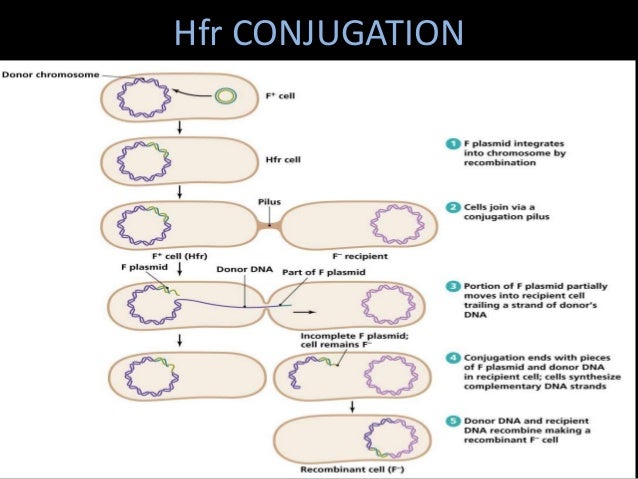
Transfer Of Copy Of F Plasmid To The Recipient Cell Via Conjugation Tube.
Underwhich condition, it uses the rolling circle mode?) The hfr strain is able to transfer some of the host genes to the recipient. The f + cell is termed so due to the presence of extrachromosomal genetic material.
The F Factor Is An Episome.
On the other hand, an hfr cell is short for “high frequency of recombination.” Coli strain in which the f plasmid isintegrated into the chromosome. A) if the f factor excises from the bacterial chromosome and enters a recipient cell via conjugation, a new hfr cell will be.
All Cultures Of F+ Strains Have A Small Proportion Of Cells In Which The F Factor Is Integrated Into The Bacterial Chromosome And Are, By Definition, Hfr Cells.
These hfr cells transfer markers from the host chromosome to a recipient during conjugation. (under which condition, it uses the theta structure? Hfr are able to conjugate with only other hfr cells, and f+ cells are able to conjugate only with other f+ cells.
This Occurs Because The F Factor Has Integrated Itself Via An Insertion Point In The Bacterial Chromosome.
Conjugation between an hfr cell and an f cell does not usually result in conversion of exconjugants to the donor state. F+ cells are cells containing f plasmid (f plasmid = plasmid containing f factor) at 00:42. 1.the insertion sequences (yellow) on both the f factor plasmid and the chromosome have similar sequences, allowing the f factor to insert itself into the genome of the cell.
F Plasmids Contain Fertility Factor Coding Genes.
Hfr strains have the f plasmid integrated into the chromosome. Bacterial strains which contain f plasmids are known as f+ strains. Hfr are able to conjugate with only other hfr cells, and f+ cells are able to conjugate only with other f+ cells.