Is Water Freezing Exothermic. Freezing water is what kind of process? This problem has been solved!
Jan13 from www.slideshare.net
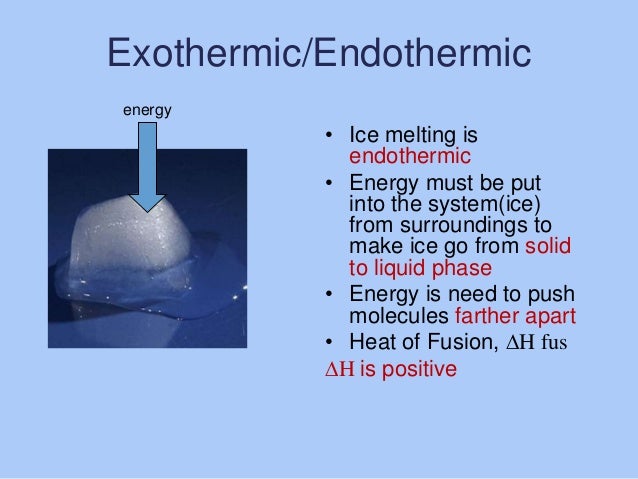
Melting, evaporation and sublimation are endothermic processes while freezing, condensation and deposition are exothermic processes. Ice melting is an exothermic process. This makes freezing an exothermic reaction.
Water Freezing Has A Negative Change In Enthalpy.
Freezing water is what kind of process? This problem has been solved! We can all appreciate that water does not spontaneously boil at room temperature;
When The Water Is Placed In A Freezer, The Water Slowly Loses Heat To The Surrounding Cold Air.
Therefore freezing water is an exothermic process. This makes freezing an exothermic reaction. Usually, this heat is able to escape into the environment, but when a supercooled water bottle freezes, the bottle holds much of that heat inside.
Melting, Evaporation And Sublimation Are Endothermic Processes While Freezing, Condensation And Deposition Are Exothermic Processes.
In your freezer the water gives up its heat to a low boiling point liquid. Ice melting is an exothermic process. When water becomes a solid, it releases heat, warming up its surroundings.
Exothermic Asked Olaf Buchhop Last Updated 23Rd June, 2020 Category Science Chemistry 4.3 2,561 Views Votes Fusion, Vaporization, And Sublimation Are Endothermic Processes, Whereas Freezing, Condensation, And Deposition Are Exothermic Processes.
This makes freezing an exothermic reaction. This makes freezing an exothermic reaction. Freezing water is an opposite process.
No, Freezing Is Exothermic As The Water Loses Energy To Its Surroundings As It Freezes.
The results of each experiment described above would be the same whether water freezing were exothermic, isothermic, or endothermic! Is freezing exothermic or endothermic process? The difference between endothermic and exothermic reactions lies in the words themselves.